On Measurement
Type of Work
Self-Directed
Role
Designer, Researcher
Project Description
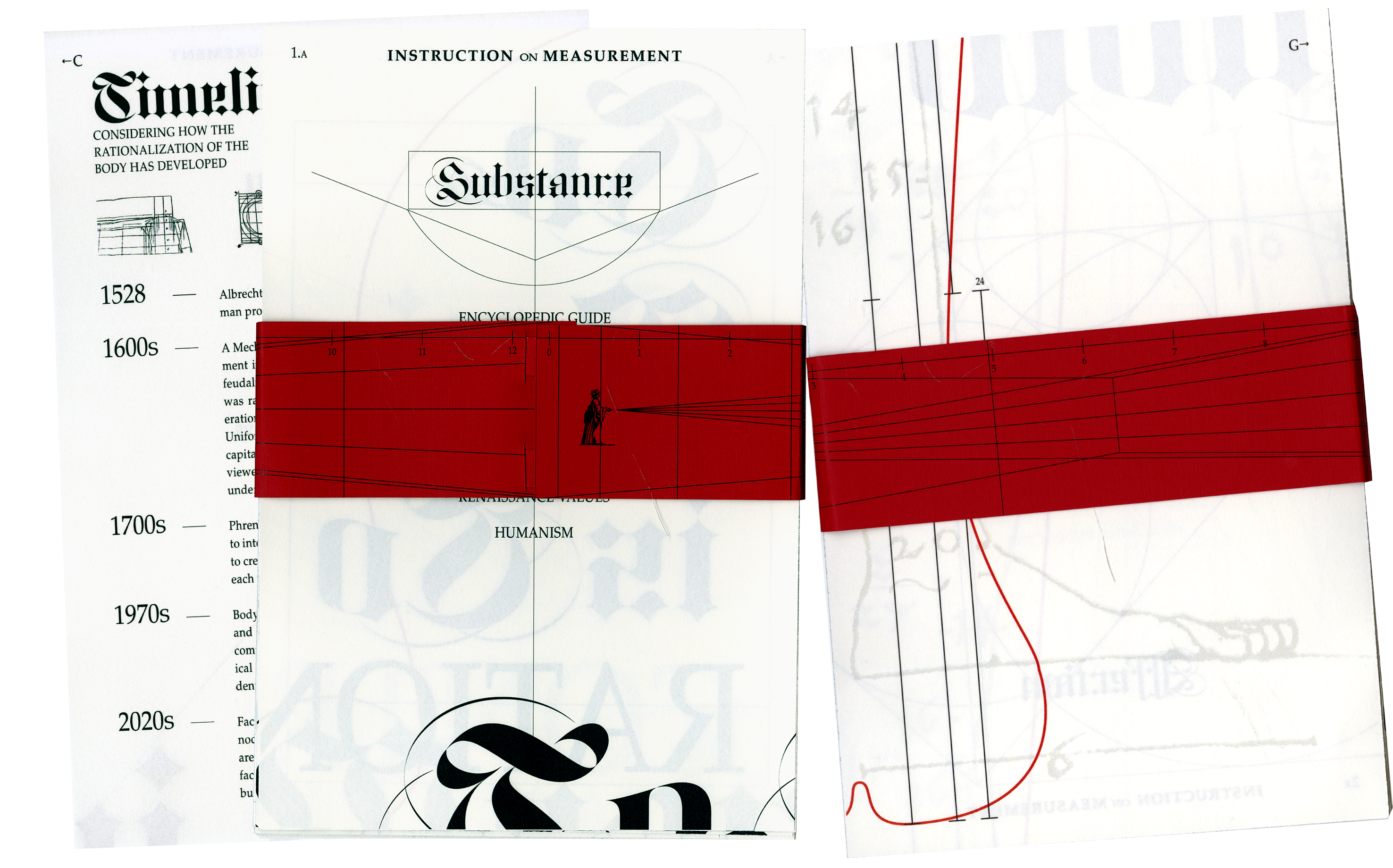
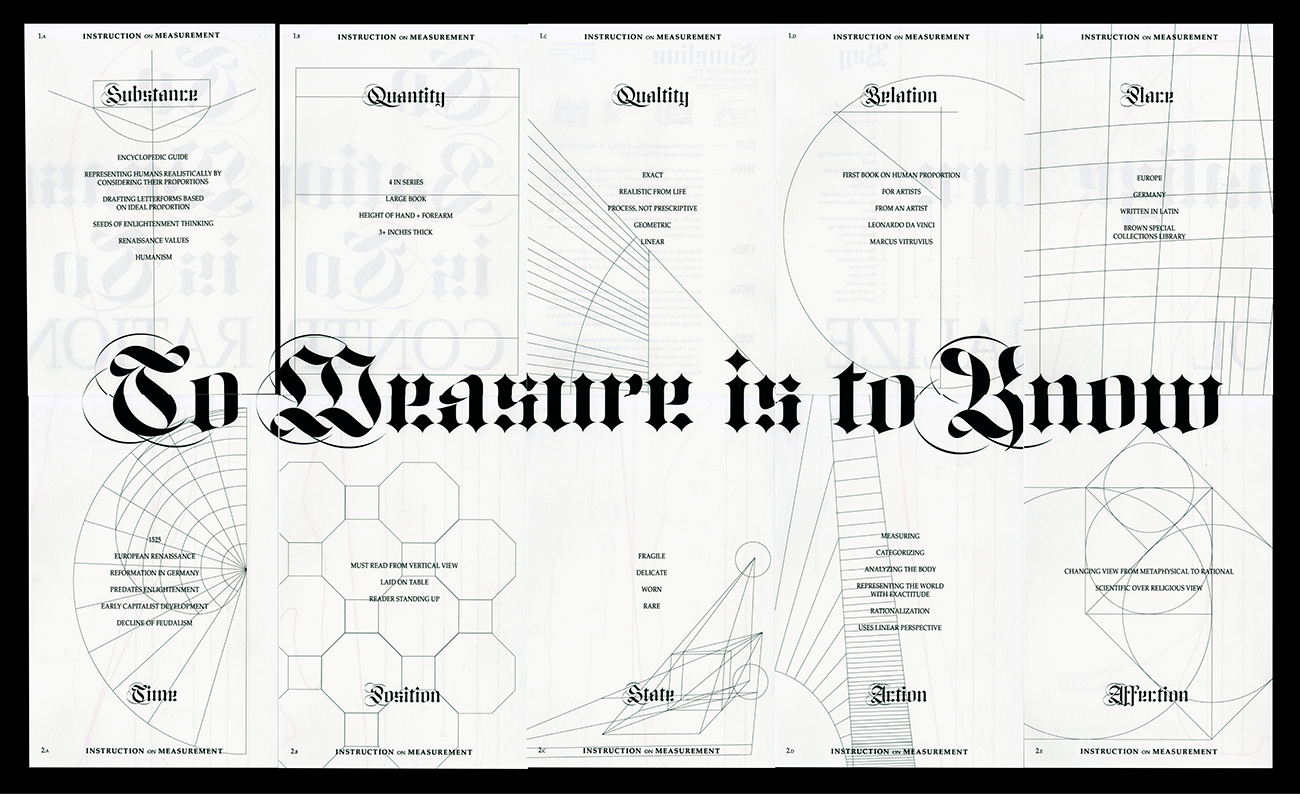
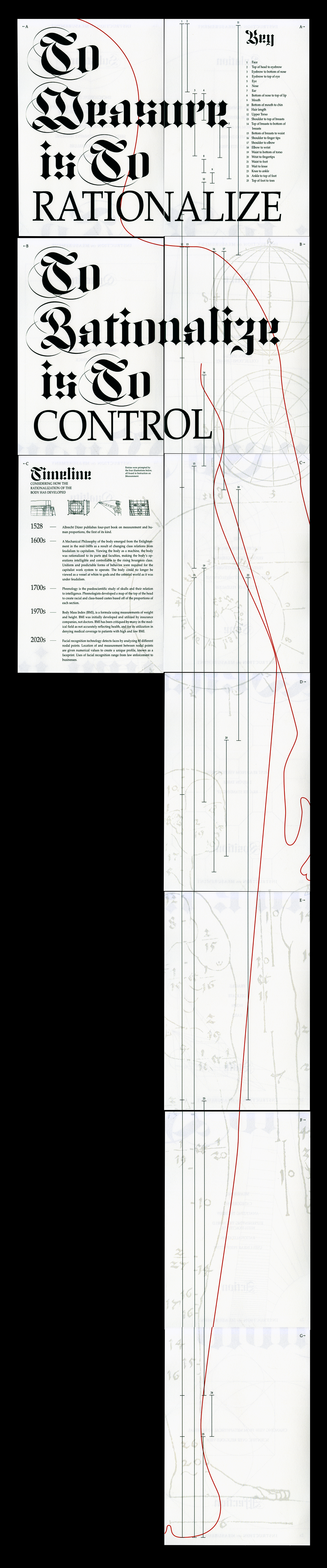
How a culture views the body is historically and politically specific. Albrecht Dürer’s Instructions on Measurement, published in 1528, marks a transition for how the western body is represented—shifting from a metaphysical understanding to a rationalized subject. In contrast to feudalism, where bodies were considered at the whim of celestial cycles, weather events, and spiritualities, the enlightenment-era wage-laboring body is machinic, predictable, measurable, and, by extension, controllable. This also coincides with the repression and destruction of thousands of years of tradition centering embodied ways of knowing in and outside of Europe.
Over time pursuit of bodily knowledge has become nearly indistinguishable from the pursuit and possibility of control. I use my own body to illustrate this logic, and On Measurement considers the historicity of Dürer’s work and situates its representation within a lineage of technologies from 1528–today that aim to capture, measure, and analyze the body.
Over time pursuit of bodily knowledge has become nearly indistinguishable from the pursuit and possibility of control. I use my own body to illustrate this logic, and On Measurement considers the historicity of Dürer’s work and situates its representation within a lineage of technologies from 1528–today that aim to capture, measure, and analyze the body.
Design, writing, archival, historical, and theoretical research


↑ Illustrations from Instruction on Measurement (1528).