Girlhood Arrested
Type of Work
Self-Directed (later commissioned by client), Collaborative
Role
Book designer, author, editor, workshop instructor
Project Description
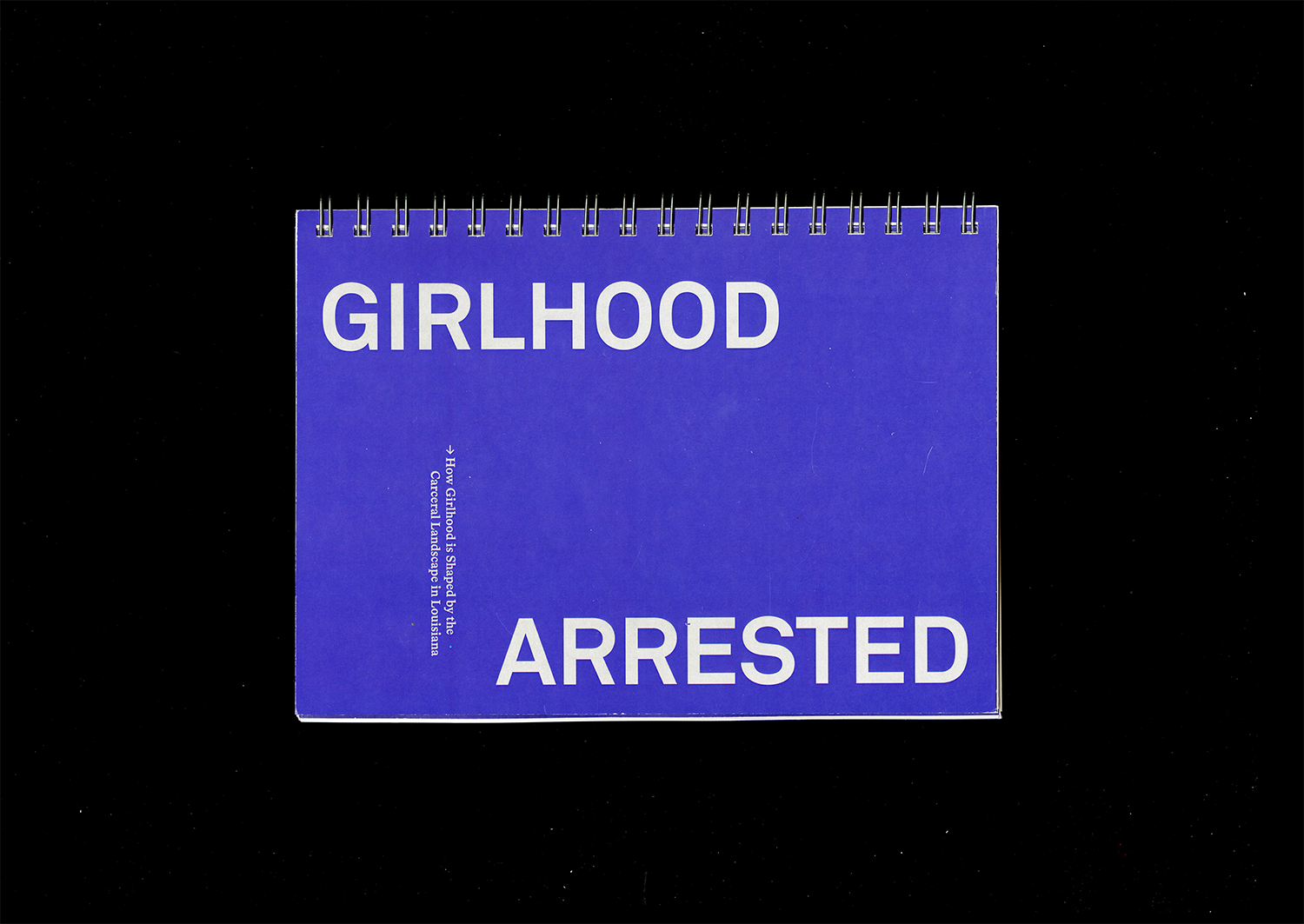
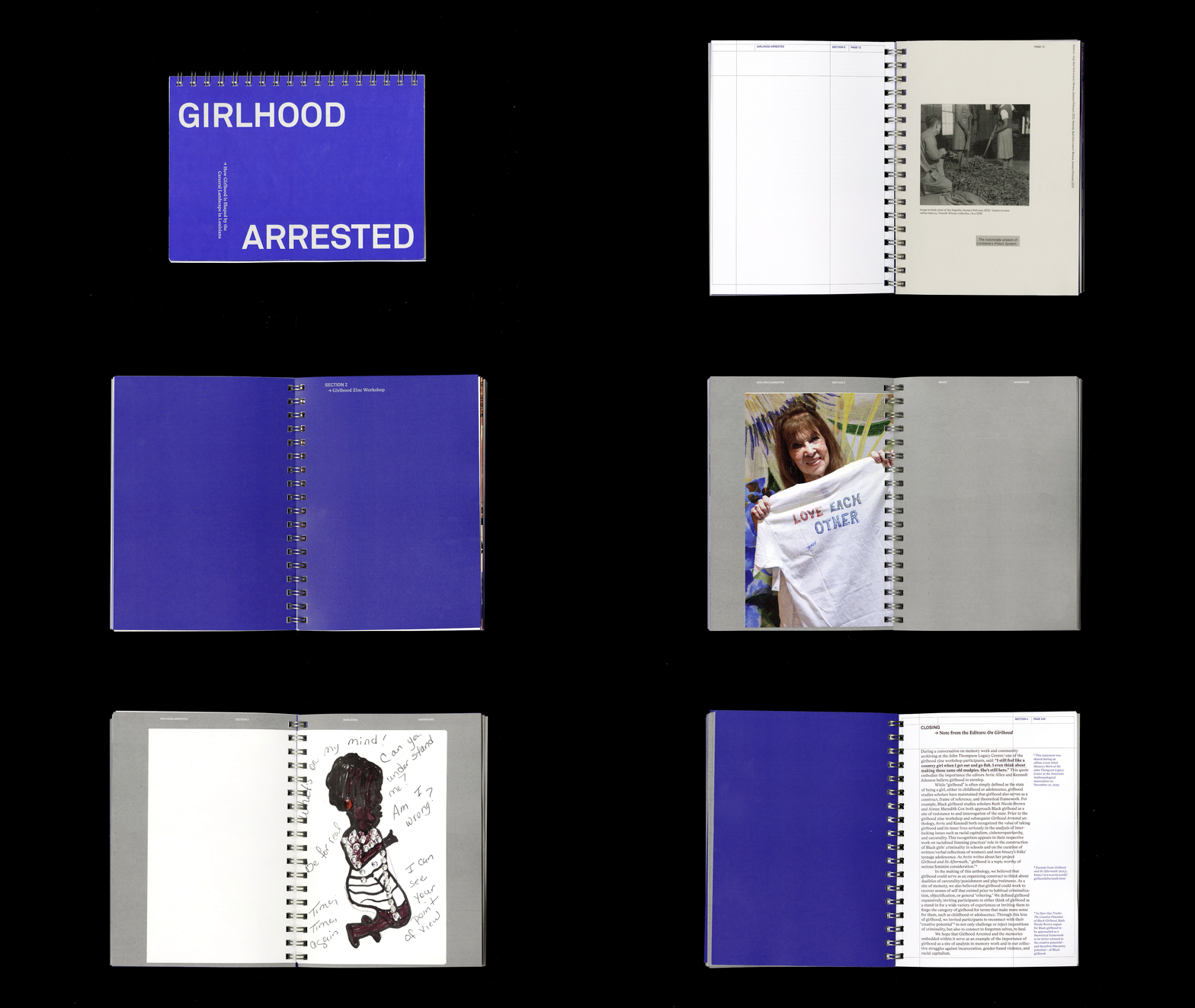
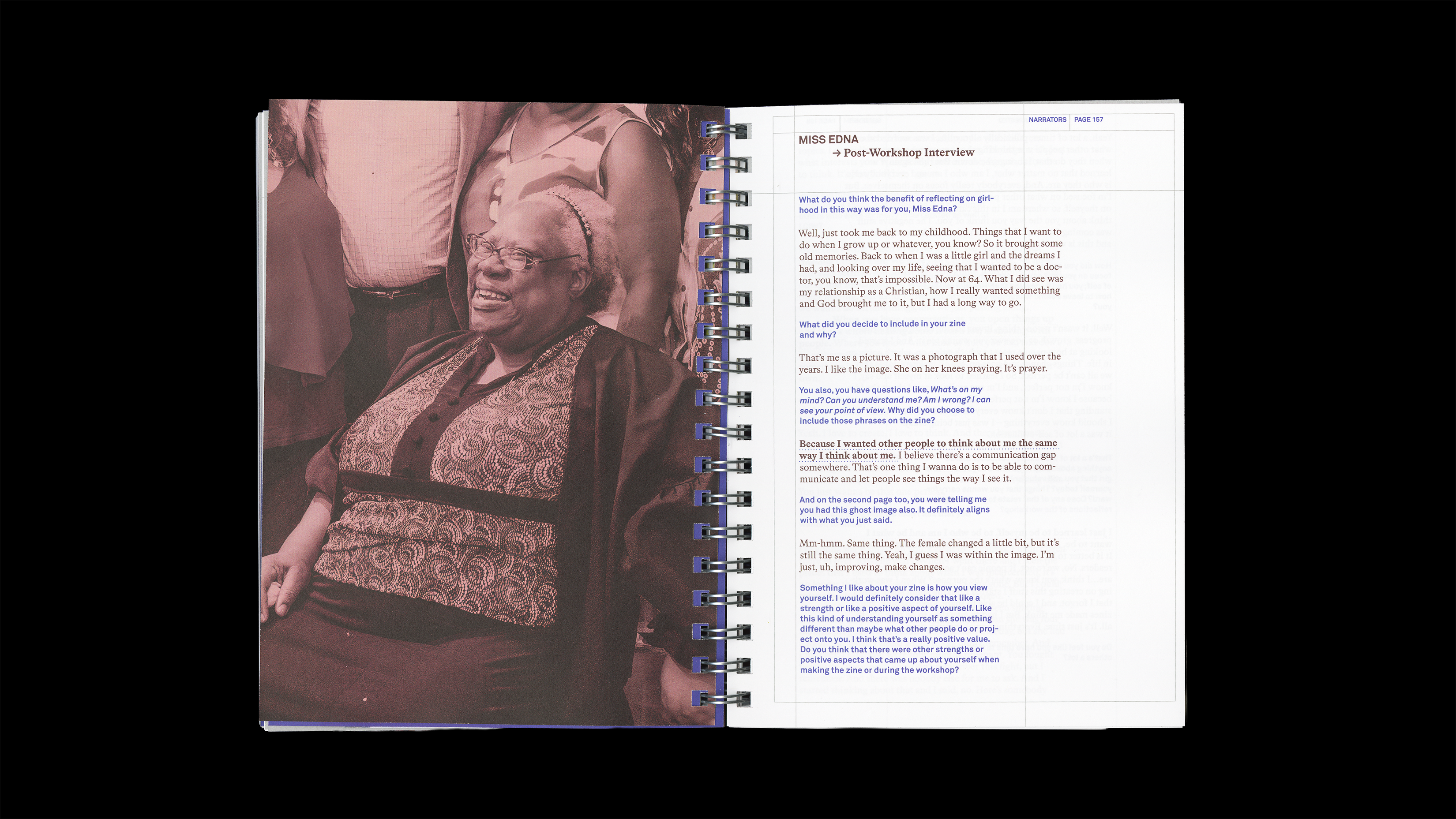
What began as a zine and self-publishing workshop with The Visiting Room Project (TVRP) developed into a 230-page book initiated by my collaborator Kennedi Johnson and me. Girlhood Arrested: How Girlhood is Shaped by the Carceral Landscape in Louisiana is a reflection on the Girlhood Zine Workshop we held, the possibilities of girlhood as an organizing construct of self outside of incarceration, and is a transhistorical engagement with the archival gaps of women’s lives and stories. It contains zine facsimiles and t-shirts by participants, essays, interviews, and archival material from the Louisiana state archives.
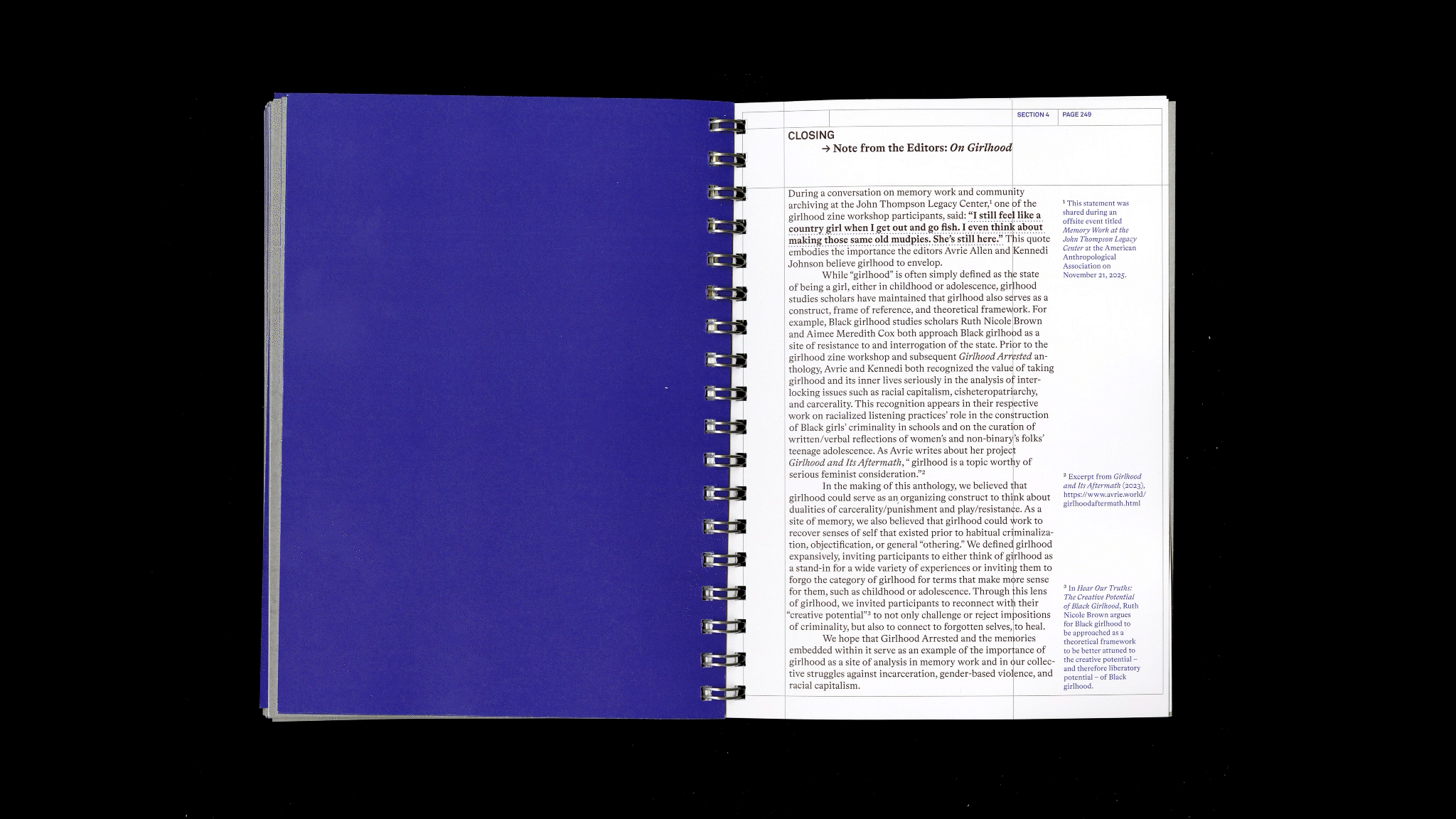
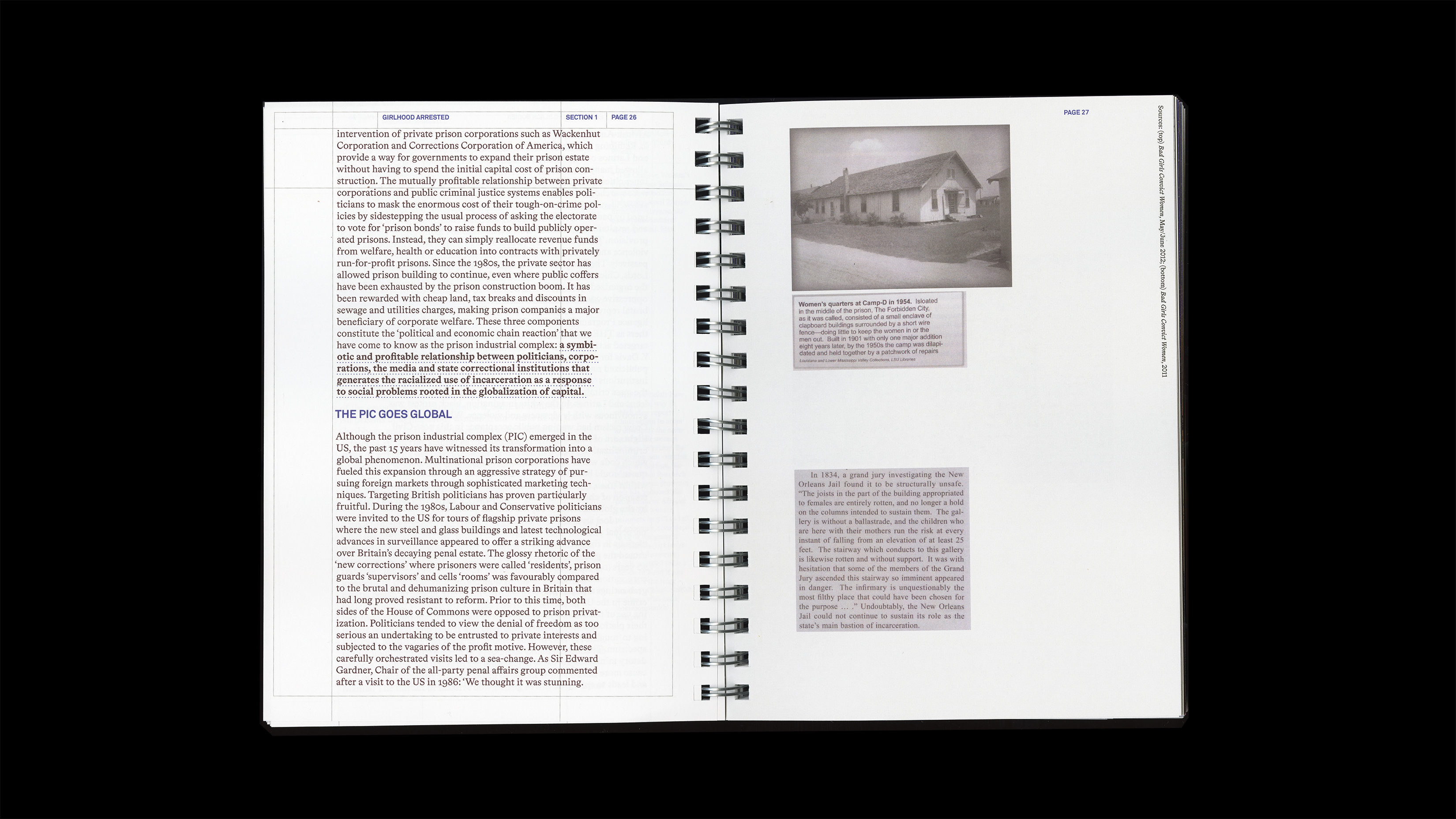
The design takes inspiration from disciplinary forms in prison. Throughout the book, text and images run over and outside of the gridded lines with no regard for attempts to fix or constrain—a conceptual move reflecting the formation of identity outside of the context of incarceration.
The design takes inspiration from disciplinary forms in prison. Throughout the book, text and images run over and outside of the gridded lines with no regard for attempts to fix or constrain—a conceptual move reflecting the formation of identity outside of the context of incarceration.
Book design, art direction, workshop facilitation and development, visual and historical research, writing, concept development, interviewing
↑ Form used as a visual reference.
↑ Found images of Louisiana women's prison wayfinding typography.